Third Party
Lark VCR, Joanna Cheung, Zoe McCloskey, Rhonda Holberton, Erica Scourti, and Angela Washko
CTRL SHFT Gallery, Oakland, CA
November 6 – December 3, 2016
View the press release
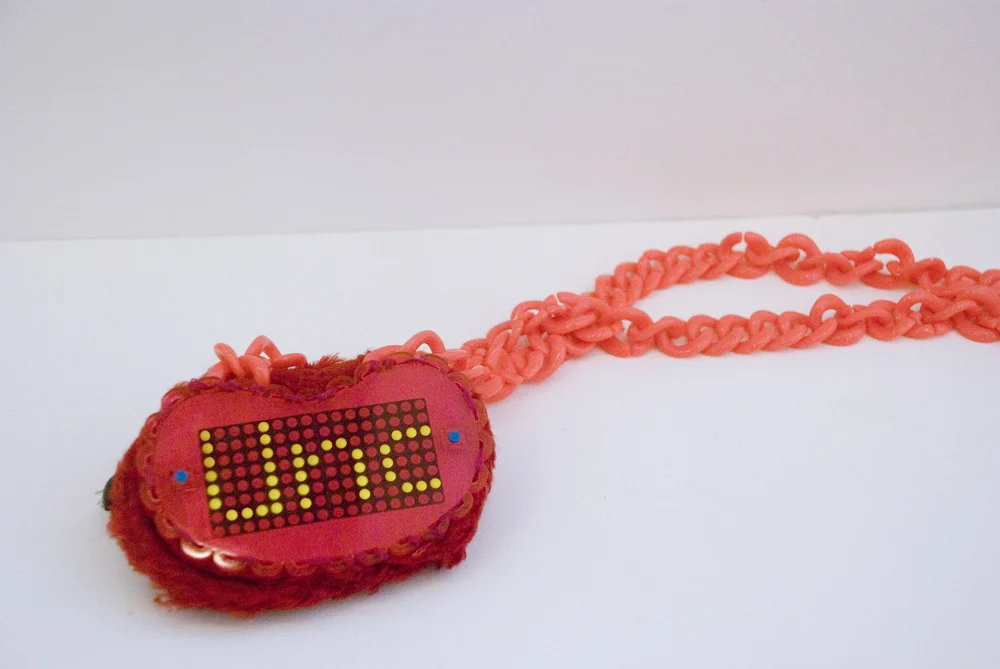
“The era of personalization began on December 4th, 2009” declared author Eli Pariser in his book The Filter Bubble. The date marks the introduction of the patented algorithmic filter Google established to track users online. The filter is designed to predict accurate recommendations in search results and advertisements in correspondence with monitored user preferences online. Tech companies such as Apple and Facebook now employ this personalization filter as third parties to mine individual characteristics and subsequently calculate relevant content. Third Party examines these quantifiable personalized traits rendered in technological systems that purport a sense of individuality and personal growth. Although the individual is central to these transactions, the results one ultimately receives are often one-size-fits all categorizations, and frequently skewed by a Western male perspective.
Each artwork featured in Third Party serves to critique the male gaze evident within personalization filters. The selected artworks question the authority exercised to distinguish individuals through coding, while also investigating who has access to determine economic and informational value through the use of these codes. Not only do the artists employ the use of technology and an online environment to grapple with how one is seen through code, but the artists also directly involve the physical body. In doing so, the individual is reinstated as a priority within an intangible online system that impacts information, objects, and ideas. Third Party establishes a platform to confront the perpetuation of dominant ideologies through methods of algorithmic categorization.
CTRL + SHFT is a space for hybridization and other forms of experimentations. It contains both artist studios and a white cube for exhibitions. It is also an enterprise run entirely by women artists and curators, and they welcome members of the local and international art community to submit proposals for exhibitions and art exchanges. Funds for this exhibition generously provided by an Alternative Exposure grant from Southern Exposure.




Alma Mater: Methods
California College of the Arts Hubbell Street Galleries
CCA Alumni
2019
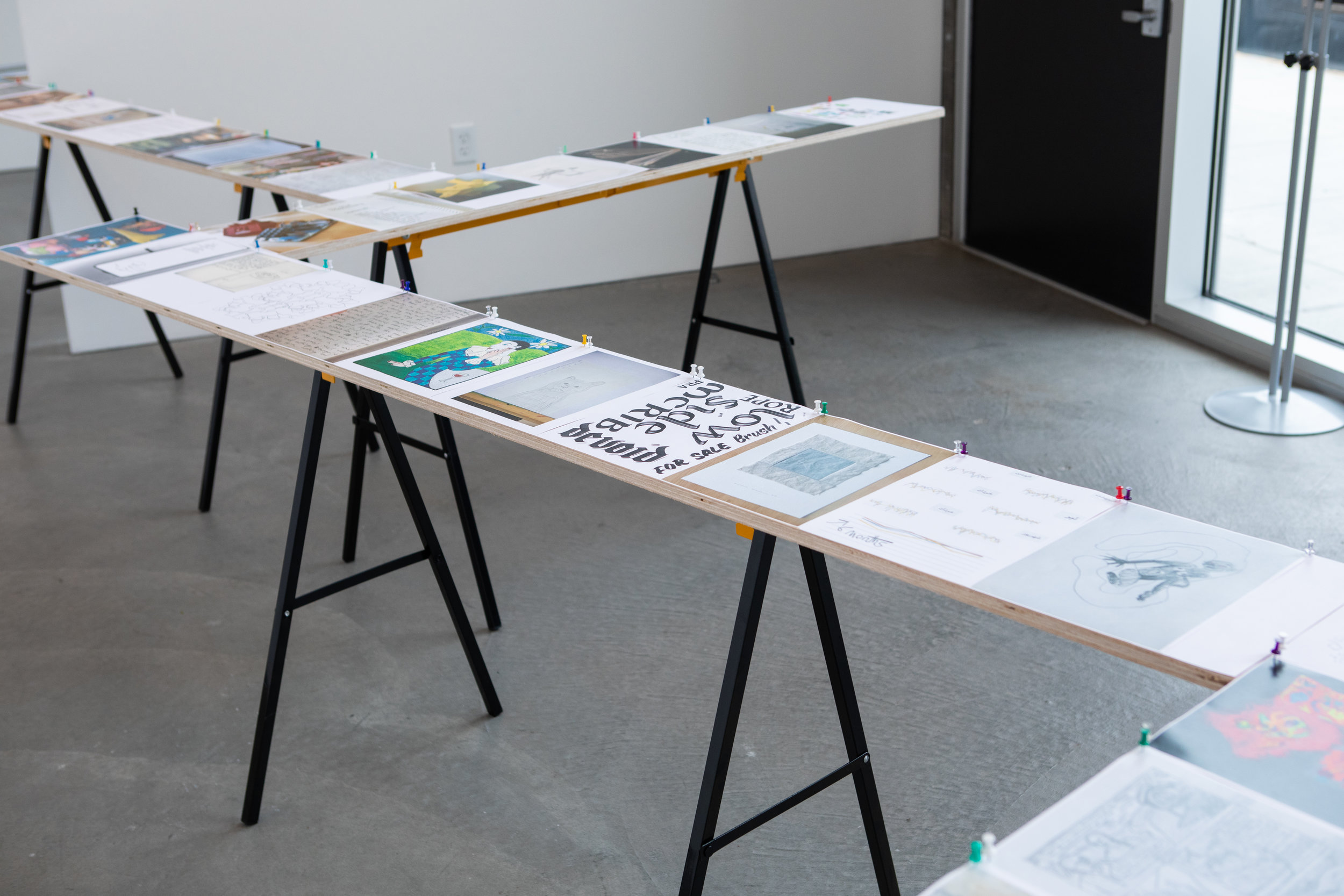
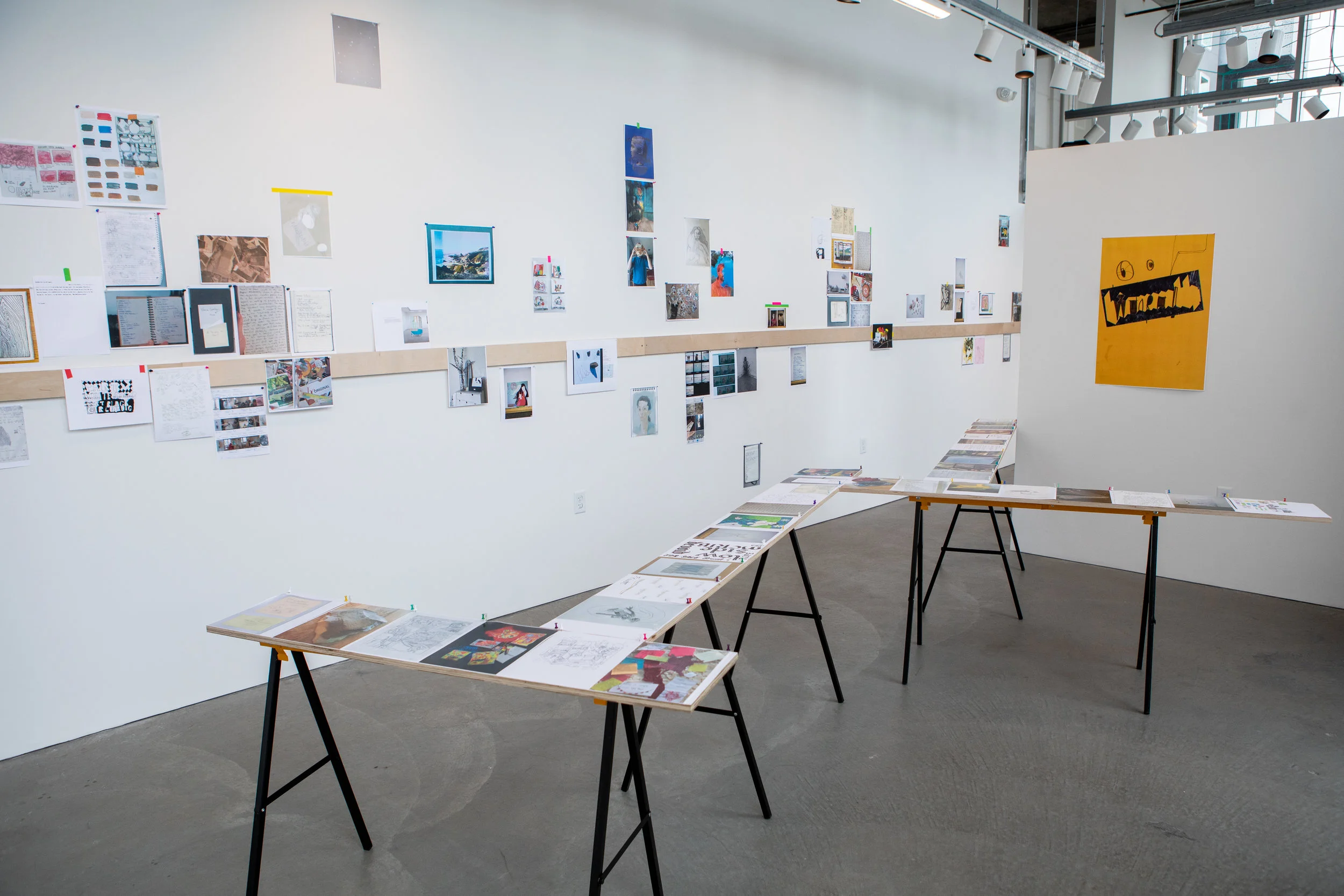
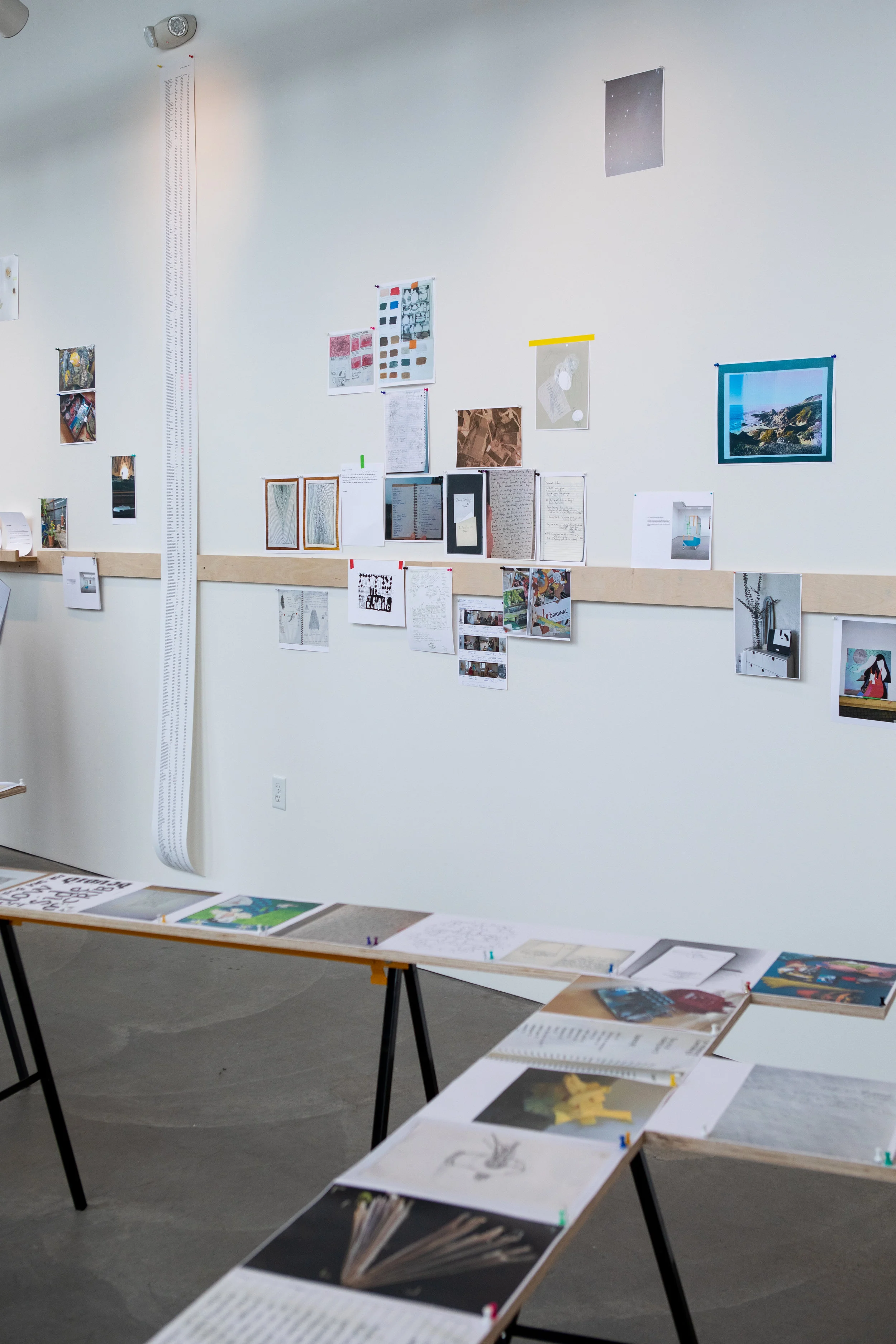
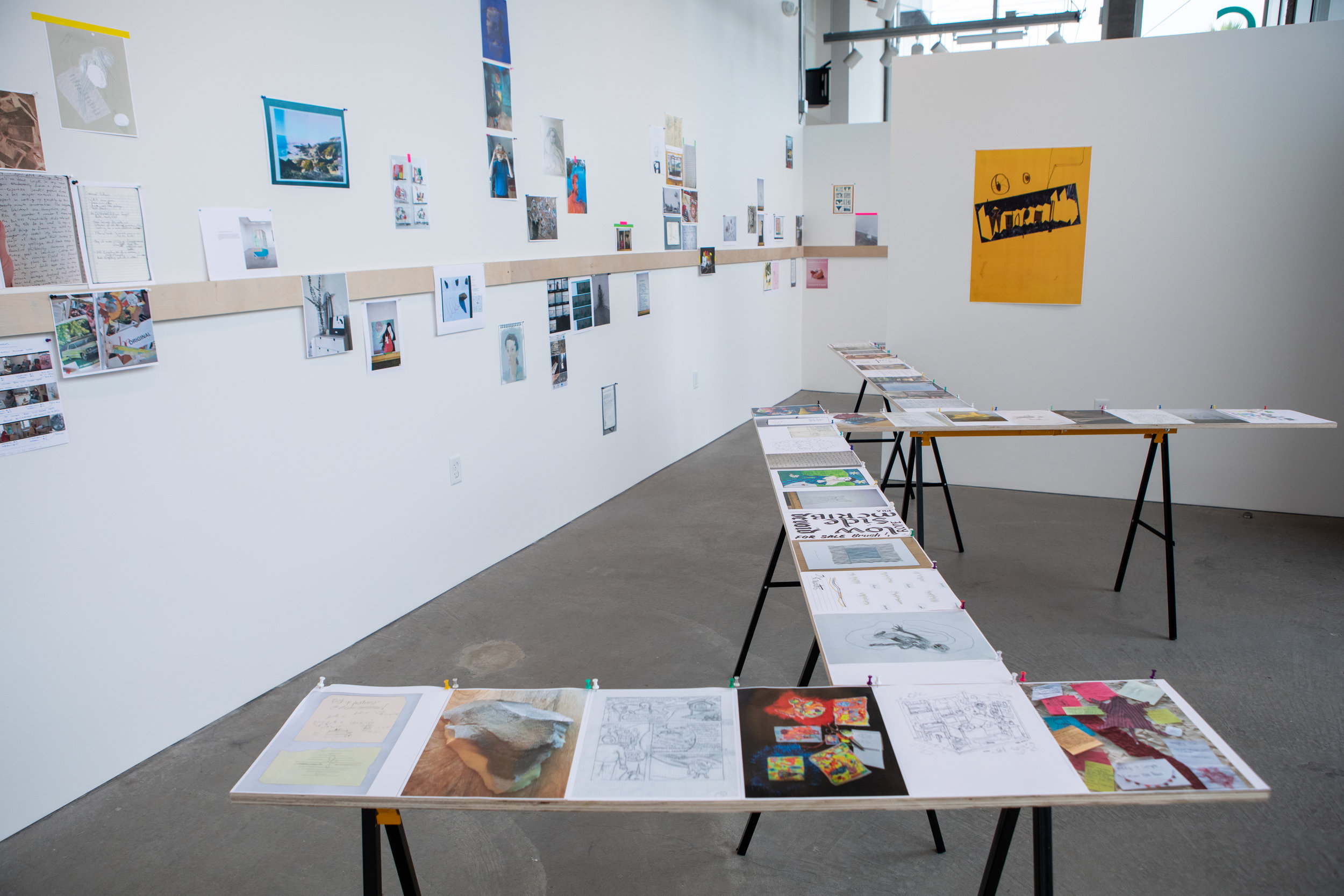
For the second iteration of the college’s biennial series of alumni exhibitions programming, CCA Exhibitions and the CCA Alumni Association will partner to highlight the idea of process within the practices of recent alumni from across the college’s four divisions: Fine Arts, Design, Architecture, and Humanities and Sciences. The exhibition will explore shared threads in artistic practices of sketching, note taking, modeling, mapping, drafting, and rendering. These process-based methods expose the pathways creative individuals depend upon to obtain a final product or idea. By celebrating this amorphousness through the form of an exhibition, Alma Mater: Methods will move beyond what is often exhibited within the white cube—finality, succinct expression, monetary value—and will instead prioritize a thinking-through-making approach that is shared among the college’s creative communities and disciplines. It is here where conversations begin, new connections form, and low stakes are valued.
This exhibition was co-curated by Beth Abrahamson (MFA Design 2015), Sarah Hobstetter (MArch 2010), Mik Gaspay (MFA 2011), and Tanya Gayer (MA Curatorial Practice, Visual and Critical Studies 2016).
Photos by Nicholas Bruno






Humor US
Douglas Angulo, Nathan Becka, Boris Scherbakov, Kaitlin Trataris, France Viana, Hui Meng Wang, Jin Zhu
Embark Gallery, San Francisco, CA
September 9 - October 22, 2016


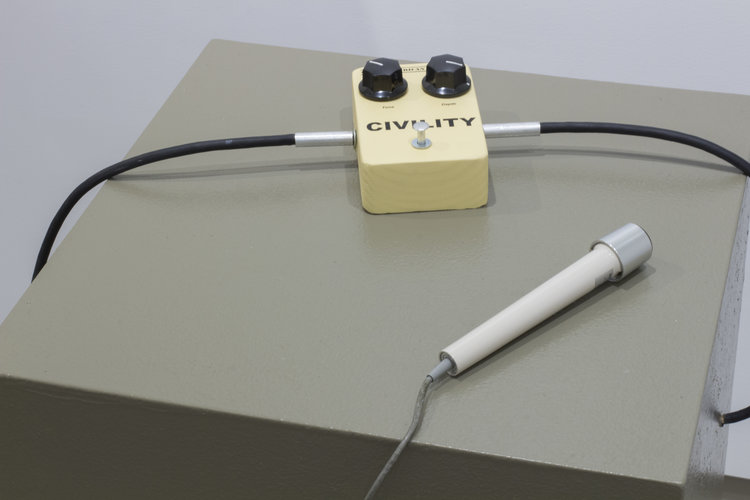


Humor US considers philosopher John Morreall’s definition of humor as “amusement that takes pleasure in a cognitive shift.” Indeed, much of what we find laughable also allows us to think differently about people, ideas, and states of being. Yet, in light of the current election season, humor can also function as an aggressive act of power and cause destructive effects. The graduate students featured in Humor US utilize comicality as a medium to reflect on the world outside of academia in the new upcoming presidential tenure. Through installations, videos, and photographs embedded with wittiness, the artists display personal experiences of disenfranchisement, criticisms regarding the American Dream, and platforms for positive social and political change made possible by the simplicity of simply listening to one another.
Jin Zhu’s video piece sets the tone for the exhibition by providing viewers with a historical context and well-trodden path associated with Western politics––the disruption and marginalization of the “other” by the white male. Douglas Angulo's video piece, and his deafening stare within it, builds on Zhu’s concepts and asks us to take a hard look inward to consider how we form and project identity, and construct misconceptions of identity. The work of France Viana and Hui Meng Wang question what it means to step in and out of traditional and individual identity in a photographic exploration and video piece, respectively. Viana searches for answers in the neighborhoods of Filipino Americans and confronts their political values. In a satirical commentary on the emerging Chinese middle class, Wang’s video investigates the disconnection between their idealized lifestyle and actual reality that is increasingly shaped by the political and social interests of the West. Nathan Becka's objects and the installation of Kaitlin Trataris mock the blind acceptance that follows campaign endorsements and empty promises given by both powerful figures and everyday citizens simply due to the chase of the American Dream. Finally, it is Boris Scherbakov’s sound installations that presents viewers with some answers while grappling with the current political elections: to truly listen to our everyday surroundings and focus on conversations that lead to greater cultural and political understanding.
Full Disclosure
Irene Carjaval, Martin S. Gardea, Patrick Hothan, Kaveh Sayar Irani, Nicole Lavelle, Melissa Miller, Channing Morgan, Emmanuel Sevilla
Adobe Books Back Room Gallery, San Francisco, CA
April 18 – May 10, 2014
Full Disclosure showcases artists from the MFA graduate programs of both the San Francisco Art Institute and California College of the Arts as part of a collaboration project, entitled SFiCA. SFiCA’s mission is to pool resources and provide as many opportunities for dialogue, exhibition, and participation as possible to the graduate students of both schools. A natural and necessary coupling, SFiCA’s programs foster a culture of collaboration between artists, curators, designers and writers within the larger Bay Area arts community. The structure of SFiCA’s first event is entitled BREAKOUT. It is similar to a music festival with different events happening on several ‘stages,’ including galleries and artist-run spaces throughout San Francisco and Oakland. BREAKOUT focuses on specific areas of interest under an umbrella theme of institutional critique and collaboration between the two schools, while also highlighting key concerns of current art practices across programs.
One of the many exhibitions occurring during the season of BREAKOUT, Full Disclosure unites artists who explore discourses of text and image by appropriating and manipulating the frameworks of typography, signage, advertisements, and books. This exhibition aims to analyze contemporary visual culture by uncovering the process of seeing language and internalizing it in order to confront ideologies of feminism, identity, consumerism, and race. Full Disclosure exhibits works on paper, sculpture, installations, and spoken word to encourages the viewer to experience aesthetic renderings in place of textual structures to communicate how our generation is seeing the world in a new way.
The opening reception will feature a flash fiction reading by Patrick Newson and Gabriel Edwards.


2x2 Solo Show: Ali True
Pro Arts Gallery, Oakland, CA
2012
Ali True responds to elements that reside within a peripheral context. Her use of both weighty and frail materials—such as thread, salt, bronze, glitter and crystals—allows her to highlight architecture, light and sound, and reveal a presence that otherwise remains invisible. Through the intersection of these materials and elements, True encourages her audience to reconsider their account of everyday space and how they choose to interact within it.
True additionally breaks down the hierarchy that can be associated with an exhibition space. Instead of encountering artwork that prevents physical interaction by the use of frames and expensive materials, she presents the viewer with installations that can physically be walked upon or taken inside and outside of the gallery, as with her kaleidoscopes. Her works only become defined in connection to the bodies that activate the space and materials. These interactions found in the gallery function as collaborations or tributes to a site that aid in certain energies amongst viewers and elements alike.
ln the relationship that True initiates for her audience, viewers develop a state of awe for her elements' persona and living presence among us. The combination of pneumatic experiences and breakdown of exhibition space allow for a sense of essence that is found within actions and physical connections. This sense is inherent in our search for inspiration and revitalization, yet only exists within the back of our minds. True eliminates this distinction between body and mind to encourage her audience to see themselves as a sentient agent in the domain of art and everyday space.


Visions of Yore
Megan Gorham, Erin Mitchell, Alexis Arnold, Lori Hepner, Allyson Seal, Daryll Peirce, Dan Herrera,
Kylea Borges, Christine Elfman, Lacy Davis, & Margo Duvall
Gallery Hijinks
2012
Visions of Yore brings together selected visual and performance art from a juried call for artists whose work represents “an ephemeral state of being in regards to the visual and formulated exploration of memories.” These chosen artists illustrate the myriad of ways to interpret memory, time, and how these shape our internal consciousness and self-awareness. Selected works include those by Megan Gorham, Erin Mitchell, Alexis Arnold, Lori Hepner, Allyson Seal, Daryll Peirce, Dan Herrera, Kylea Borges, Christine Elfman, Lacy Davis, & Margo Duvall.
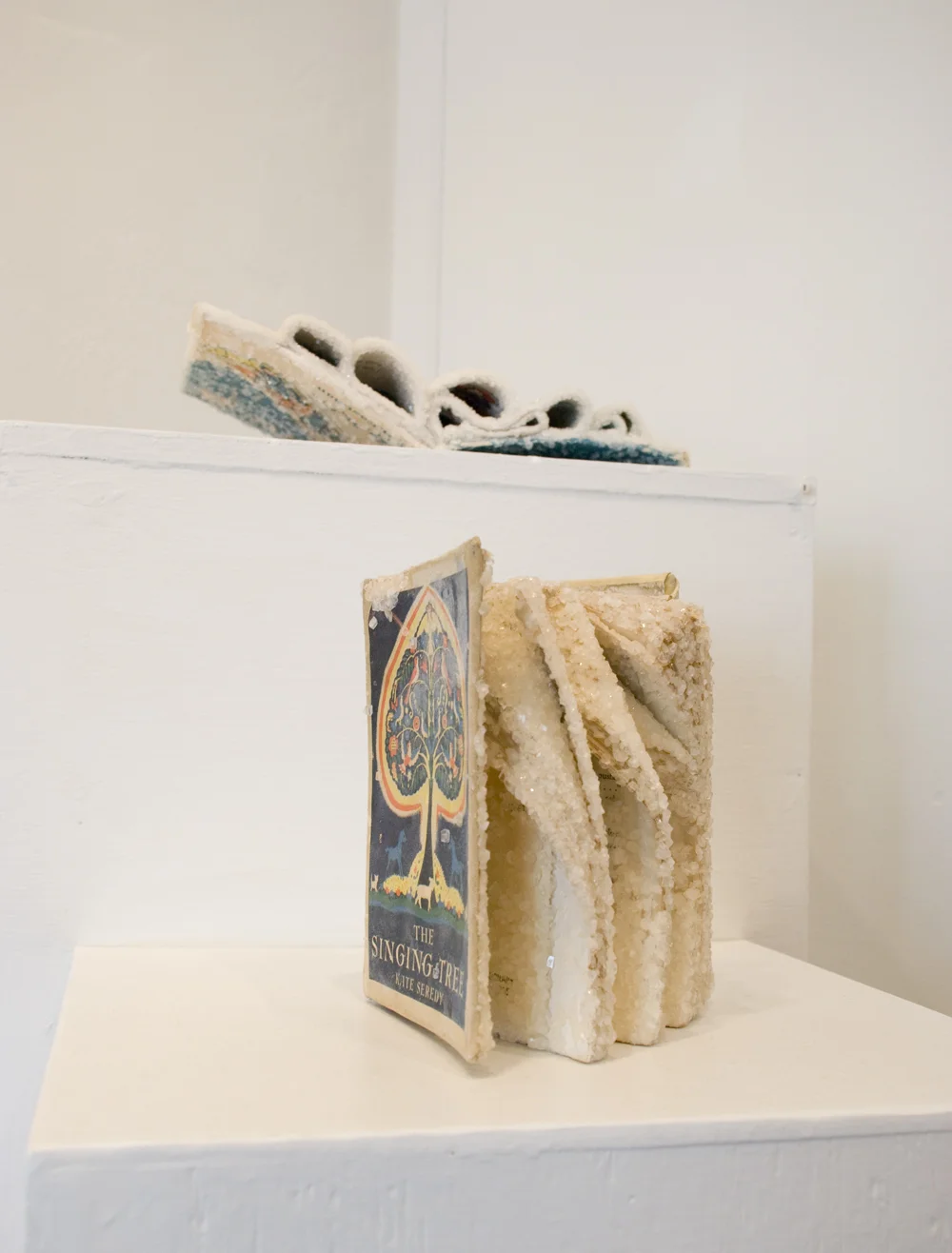
Alexis Arnold’s books frozen with heavy borax crystal growth are both time-based artifacts and geologic specimens. Books, time-based mediums of performance in and of themselves, also evince more nuances of memory and the past as all too often books are placed away on a shelf, awaiting the next moment the performance of reading begins again. The borax crystals succinctly append this to the work’s visual reading. Books carry even more layers of meaning within the context of memory, history and time than just the act itself, or the object’s time sitting on a shelf. Often, our experiences and consciousness of the world around us are shaped from specific stories, the books’ messages or narratives lasting longer than just the act of reading.
Lori Hepner’s series of virtual portraits based upon the 140-character Twitter updates bring attention to the divide of virtual and physical identities. This series looks at a genre of portraiture that is more time-based. Ephemeral moments of identity, as exemplified in social media, questions one’s impressions people via the web interacting with identities in the physical world.
Kylea Borges’ collages, whose materials are sourced from vintage and antique materials, are carefully crafted into forms that contrast man-made fabrications and geometrical patterns with natural materials and organic images. Her work acutely comments upon shared history: objects being both of its era and yet beyond time-based definitions. Borges’ works also illustrate processes of documentation and archiving events of the past and how they are implemented in the future, how meaning is changed, gained or lost.
Curated by Tanya Gayer and Emily Lakin